

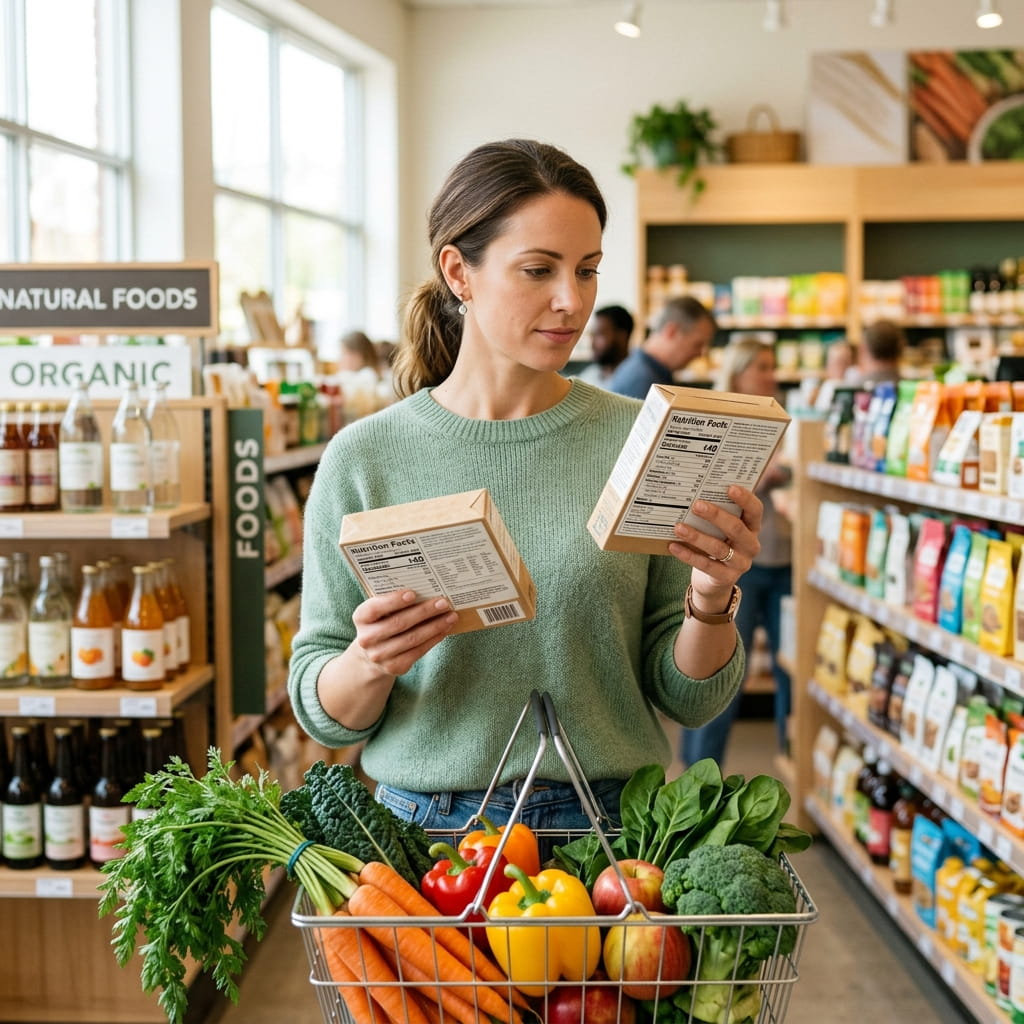
Are you sure the food you buy is really a healthy choice? Many products may seem healthy at first glance, but the label tells the real story. Food labels are one of the simplest tools you can use to make healthier choices. They give you useful information about a product’s ingredients and nutrition.
You do not have to be a nutrition expert to read food labels effectively. With some basic knowledge, you can spot healthier options and make better choices for yourself and your family. In this article, you will learn the basics of reading food labels and how to use that information to choose healthier foods.
Why Should You Read Food Labels?
Reading food labels is important because they help you understand what is really in the food you buy. Packaging design can make many products appear healthy or natural. However, reading the label can reveal what the product actually contains.
It can show you how much sugar, sodium, fat, protein, and fiber is in each serving. This makes it easier to decide whether a food fits your personal needs and health goals. That’s why taking a closer look at the label can help you make choices that align with your overall wellness.
You may also need: How to Quit Drinking Soda for Better Health
How to Read Food Labels for Healthier Choices
At first glance, food labels may look confusing, but once you understand the key parts, they become much easier to read. By focusing on a few key details, you can learn what a product really contains and make healthier choices with more confidence. Here are some simple tips to help you read food labels more effectively.
1. Start with the Serving Size
The first step in reading any food package is to check the serving size. All the calories and nutrients on the label are based on that amount. If you eat more than the listed serving size, you may take in more calories, sugar, fat, and other nutrients than you expect.
Some packages may seem small, but they can actually contain more than one serving. Many people overlook this detail and end up eating more than they realize. That is why checking the serving size first is so important.
It helps you understand what you are really eating and makes it easier to compare products and make healthier choices. Paying attention to serving size can also help you avoid overeating without noticing it.
Here are a few simple tips to help you stay on track with serving sizes:
- Use measuring cups and spoons: These tools can be very helpful in accurately measuring serving sizes. Keep them in your kitchen so you can easily measure the recommended portion.
- Check the nutrition label first: Many packaged foods include serving size information that can help you understand how much you should eat. Reviewing it before eating can make it easier to manage your portion size.
- Avoid eating directly from the package: When you eat straight from the container, it can be harder to notice how much you have had. Use a plate or bowl to portion out your food.
- Compare similar products: Two foods may look alike, but their serving sizes can be different. Check the serving size and calories in each item before making a decision.
2. Check the Calories Per Serving
After checking the serving size, the next thing to look at is how many calories are in each serving. You can usually find this number on the Nutrition Facts label. Paying attention to calories can help you manage your daily intake and make healthier food choices.
Calories are especially important when you are comparing similar products. Two foods may look almost the same, but one can contain far more calories per serving than the other. This small difference can add up over time, especially if you eat that product often.
Eating more calories than your body needs on a regular basis may lead to weight gain over time. That is why it is helpful to pay attention not only to the calories in each serving, but also to how many servings you are actually likely to eat.
Here are a few simple tips to help you manage calories more wisely:
- Review the serving size first: Check the calories after you understand the serving size. This helps you get a clearer idea of what you are actually eating.
- Consider your realistic portion: If you usually eat more than one serving at a time, multiply the calories by the number of servings you eat to find the total amount. This will give you a more accurate representation of your calorie intake.
- Look for lower-calorie options: When comparing similar products, choose the one with fewer calories per serving whenever possible. Making choices like this regularly can support healthier eating habits over time.
3. Look at the Nutrients You Want More or Less Of
After checking the serving size and calories, the next step is to look at the nutrients on the label. This gives you a better idea of whether a food fits your needs and eating habits. Some nutrients are better to limit, while others are worth getting more of.
Many people try to cut back on sodium, added sugars, trans fat, and saturated fat. Consuming too much of these nutrients over time may have a negative effect on your health.
It is also a good idea to look for foods that provide fiber, vitamins, and minerals. These nutrients play an important role in supporting your body and overall well-being. Paying attention to this balance can make it easier to compare products and make healthier choices.
4. Check the Percent Daily Value (%DV)
Have you ever looked at the percentages on a food label and wondered what they mean? The Percent Daily Value, or %DV, helps you understand whether a food is low or high in a specific nutrient based on one serving. You can find this information in the right column of the Nutrition Facts label.
The %DV is especially helpful when comparing packaged foods side by side. It gives you a clearer picture of which product is a better choice for your health. For example, if you want to lower your sodium intake, you can use the %DV to choose the product with less sodium.
When checking the %DV, remember this simple rule:
- Choose lower %DV values for saturated fat, cholesterol, and sodium
- Choose higher %DV values for fiber, vitamins, and minerals
As a general guide, 20% DV or more means a food is high in a nutrient, which can be helpful for fiber, vitamins, and minerals. A 5% DV or lower means the food is low in a nutrient, which is usually better for saturated fat, cholesterol, and sodium.
5. Read the Ingredients List Carefully
The ingredient list helps you understand what is really in the food you buy. Ingredients are listed by weight, so the ones used in the largest amounts appear first. This makes it easier to see what the product mainly contains and whether it is made with simple ingredients or more processed ones.
It is also a good idea to look closely at the first few ingredients, since they make up most of the product. Some ingredients may also appear under unfamiliar names. Look out for terms like “artificial” or “modified,” as they can indicate that a product contains more heavily processed ingredients.
If you want to avoid certain ingredients or have food allergies, checking the list can help you make safer choices. It can also help you compare products and choose the better option for your health goals.
6. Watch Out for Added Sugars
Added sugars are common in many packaged and processed foods. Even products that appear healthy may contain more sugar than you might expect. That’s why it’s helpful to read food labels carefully and look out for the different names used for added sugar.
Here are some common names used for added sugars:
- sugar
- high-fructose corn syrup
- cane sugar
- brown sugar
- glucose
- fructose
- dextrose
- maltose
- honey
- molasses
Knowing these names can make it easier to spot added sugars in the ingredient list. This is important because sugar may appear in more than one form within the same product. When several types of sugar are listed among the first few ingredients, it is often a sign that the product is high in added sugars.
Tips for Reducing Added Sugar Intake:
- Read the ingredient list and look for any of the names listed above.
- Compare similar products and choose the one with less added sugar whenever possible.
- Check the nutrition label to see how much total sugar is in one serving of the product.
- Choose foods with little or no added sugar more often, and limit packaged products that list sugar in several forms.
7. Check the Sodium Content
Sodium is another key nutrient to pay attention to when reading food labels. Many everyday foods, such as soups, sauces, breads, snacks, and frozen meals, can be high in sodium. By checking the label, you can see how much sodium is in each serving and make better choices for your health.
So what to look for when checking the sodium content on food labels:
- Sodium content per serving: Start by checking how much sodium is listed in one serving. This helps you understand how much sodium you are getting from that food. If you plan to eat more than one serving, keep in mind that your total sodium intake will also increase.
- Serving size: Always check the serving size next to the sodium amount. A food may seem low in sodium at first, but if the serving size is small, you may end up eating more sodium than you realize.
- Compare similar products: Sodium levels can vary from one brand to another, even when the products seem almost the same. Comparing similar items side by side can help you spot the option with less sodium.
- Use % Daily Value: The % Daily Value can help you quickly see whether a food is low or high in sodium. In general, choosing foods with a lower % DV can help you keep your sodium intake under control.
Conclusion
Reading food labels is an important habit that can help you make healthier choices every day. It helps you understand what is really in the food you buy. By checking important details such as serving size, ingredients, sugar, and sodium, you can compare products more easily and choose better options.
Over time, this simple habit can make shopping easier and support healthier eating habits. It can also help you feel more confident about the foods you choose for yourself and your family.
Read More: 7 Benefits of Drinking Warm Water in the Morning
Frequently Asked Questions
Why is it important to read food labels?
Reading food labels helps you understand what is in the food you buy. It can help you make healthier choices by showing details like calories, ingredients, sugar, sodium, and nutrients.
Why should I pay attention to sodium?
Too much sodium may not always be easy to notice by taste alone. Reading the label helps you choose lower-sodium options and build healthier eating habits.
Are words like “natural” or “low fat” always trustworthy?
Not always. These terms may sound healthy, but they do not always reflect the full nutritional value of a product. It is best to check the nutrition facts and ingredient list before making a decision.
How can food labels help families make better choices?
Food labels help families understand what they are buying and eating. By comparing labels, they can choose healthier options for everyday meals.
