

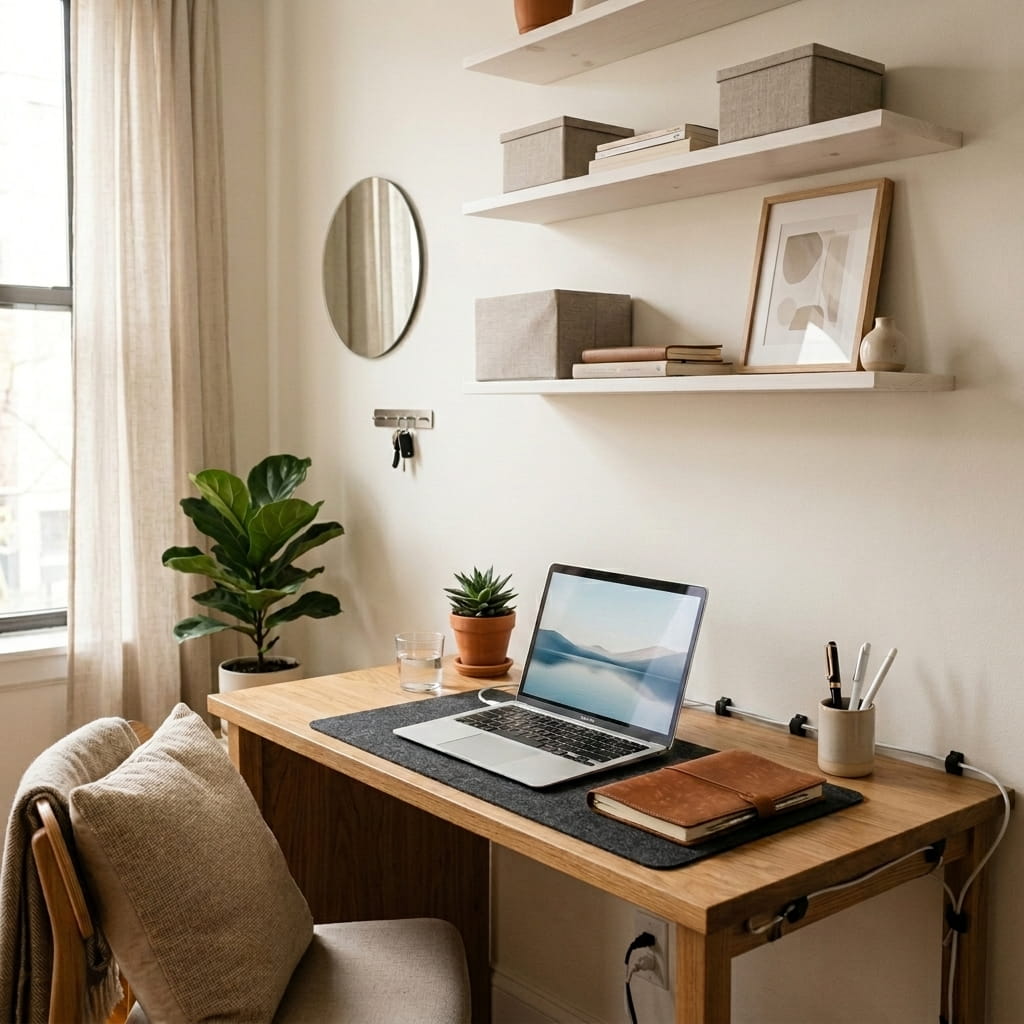
Are you finding it difficult to stay focused and work in your home office? Do you constantly feel overwhelmed by a disorganized workspace? It’s a common problem for many individuals who work from home.
But don’t worry, with a few simple organization tips, you can transform your cluttered home office into a productive and efficient workspace. Yes, it doesn’t matter how small your home office is. With the right approach, you can make the most out of your limited space and increase your productivity.
Today, I’ll talk about some practical and accessible ways to organize your small home office. These tips will not only help you stay on top of your work but also make your home office a more pleasant and inspiring place to be.
Let’s start by looking at why keeping your home office organized actually matters.
Benefits of an Organized Home Office
A well-organized home office offers many benefits, including:
- Increased productivity: When you have a designated space for work and everything you need is within reach, you can focus more easily and get more done. Instead of spending time searching for documents or supplies, you can put that energy into your actual work.
- Reduced stress: Working in a cluttered and chaotic home office can increase stress and make it harder to stay focused. When your space is organized and clutter-free, you’ll feel calmer and more in control.
- Improved health: A well-designed home office can also have a positive impact on your physical health. Good posture and proper setup can help reduce back pain, eye strain, and fatigue throughout the day.
- Boosted creativity: Your environment plays a big role in your overall mood and mindset. A clean and organized home office can boost creativity and make it easier to generate new ideas.
- Better time management: When your workspace is organized, you can plan your day more easily and efficiently. This can help you set clear priorities, stick to a schedule, and make the most of your working hours.
You may also like: How to Organize Your Kitchen Cabinets Efficiently
Tips for Organizing a Small Home Office
Working from home is more productive when you have a dedicated workspace. However, if you live in a small apartment or house, creating an efficient home office can be challenging. With a little creativity and organization, you can turn even the smallest space into an effective home office. Here are some tips to help you organize your small home office:
Choose a Dedicated Workspace
The first step in organizing your small home office is to choose a dedicated area for work. It could be a spare bedroom, closet, or even just a corner of your living room.
Try to choose a spot that is quiet and away from everyday distractions. This small step will help you mentally shift into work mode when you sit down at your desk.
If possible, try to avoid working in your bedroom as it may interfere with your ability to relax and sleep at night. The reason for having a dedicated workspace is to create boundaries between work and personal life.
Declutter and Prioritize
One of the biggest challenges of working in a small space is clutter. When you work in a small space, papers, sticky notes, and office supplies can quickly pile up on your desk. Not only does this create a chaotic and stressful environment, but it also makes it difficult to find important documents and focus on your work.
To avoid this, it’s important to declutter your small home office regularly. Start by designating a specific place for each item and getting rid of anything you don’t use frequently. This will help keep your desk free from unnecessary items and create more space for your work.
Your home office should be a place where you can feel focused and motivated, not overwhelmed by clutter. Remember to regularly clean and organize your digital files, as a cluttered computer can be just as distracting as a cluttered physical space.
Invest in Quality Equipment
Once your space is organized, focus on the tools and equipment you use every day. Invest in quality items that will make your work more efficient and comfortable.
Your home office is where you spend much of your time, so choosing the right equipment matters. Here are some suggestions for organizing and upgrading your equipment:
1. Desk
Your desk is the center of your home office setup. It should be sturdy and have plenty of space for your everyday work. If you spend long hours sitting, a standing desk or a height-adjustable desk is worth considering. This will allow you to change positions and reduce strain on your body.
2. Chair
Investing in a good-quality chair is important for your comfort. A good chair should provide proper back support and be adjustable to your height. It should also have armrests and swivel capabilities to make movement easier. It is worth investing in a comfortable, supportive chair to avoid potential back problems in the future.
3. Computer/Laptop
Your computer or laptop is the most important tool in your home office. If you are using an old or slow device, it may be time for an upgrade. A fast, reliable computer will help you work more smoothly and stay focused.
Once your device is set up, take a moment to position it correctly. Position your screen so the top of it aligns with your eye level when you’re sitting down. You may need a monitor stand or laptop riser to achieve this.
4. Lighting
Good lighting is also very important for organizing a home office because it reduces eye strain and fatigue. If possible make your home office in a room with natural light. If not, invest in a good desk lamp or overhead lighting to brighten up the space.
Keep Cables and Wires Under Control Tips
Another important part of organizing your home office is managing cables and wires. With multiple devices like a monitor, scanner, and tablet charger, wires can quickly become cluttered. Keeping them organized helps create a tidy and efficient workspace.
Here are some tips to help you manage your cables and wires:
- Use cable ties or clips: Use cable ties or clips to keep cables together and prevent them from getting tangled.
- Label cables: Labeling your cables makes it easier to identify which wire belongs to which device. You can use simple labels or color-coded cable ties for a more organized look.
- Wrap up excess cable length: If cables are longer than you need, use velcro straps or rubber bands to bundle up the extra length. This not only keeps home office neat and tidy, but also prevents tripping hazards.
Use Vertical Space Wisely
When your desk and floor space are limited, your walls can become valuable storage space. Using vertical space is one of the smartest ways to free up your desk and floor while keeping everyday essentials within easy reach.
Here are a few simple ways to use the vertical space in your small home office:
- Install floating shelves above your desk to store frequently used items such as stationery, files, and reference books. This helps keep your desk clutter-free while allowing quick access to everyday essentials.
- Hang a file organizer on the wall to keep your important papers neat and within easy reach.
- Add a pegboard to your wall to keep small items like sticky notes, headphones, and charging cables organized and easy to find.
Conclusion
Having a small home office does not mean sacrificing productivity. With a little creativity and a few organization tips, you can create an efficient and functional workspace in even the smallest spaces.
Remember to declutter regularly and keep only the essential items on your desk. Make the most of vertical space by adding shelves or wall organizers for extra storage. Keeping your daily essentials close at hand helps you stay focused and saves you from searching through drawers.
Finally, personalize your workspace with decor and plants that you enjoy. With these tips in mind, you can transform your small home office into a productive and enjoyable space.
Frequently Asked Questions
What is the best way to reduce clutter in a home office?
Go through your desk and remove anything that is not essential for work. This includes old papers, unused supplies, and unnecessary decorations. Organize your desk by grouping similar items together and placing them in specific areas. Give every item a proper home, whether that’s a drawer, a shelf, or a labeled box.
Do I need expensive furniture to set up a home office?
Not at all. A sturdy desk and a supportive chair are the two essential pieces of furniture you need for a home office. You don’t need to splurge on fancy designer furniture to have a functional and comfortable work space.
How often should you declutter your home office?
A quick tidy-up at the end of each workday helps, but a deeper declutter once a month is a good habit. This includes clearing your desk, sorting through papers, and organizing your digital files too.
What are the best storage ideas for a small home office?
Floating shelves, wall-mounted file organizers, pegboards, and desktop organizers are all great options. The goal is to move storage off your desk and onto your walls, so you have more room to work.
