

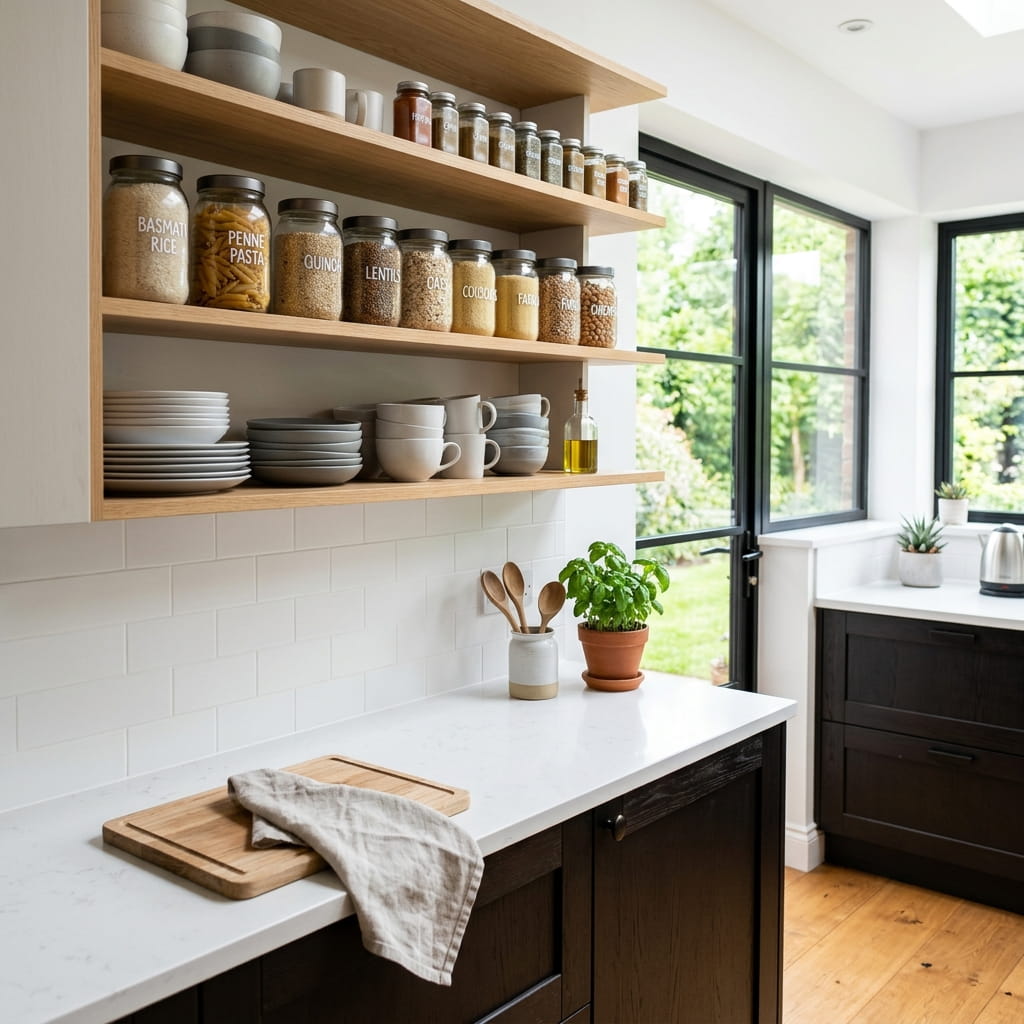
Do you often have a hard time finding what you need in your kitchen cabinets? Do you feel like you’re not making the most of your cabinet space? Organizing kitchen cabinets can be daunting, especially if you have a lot of items and limited space.
But don’t worry. With a few simple tips, you can learn how to organize kitchen cabinets efficiently. This will not only make your kitchen look tidier, but it will also save you time and frustration when cooking or looking for ingredients.
First, let’s understand why organizing your kitchen cabinets is important.
Why Should You Organize Your Kitchen Cabinets?
Organizing your kitchen cabinets has many benefits. Some of the key reasons are:
- Saves you time – When everything has its own spot, you can grab what you need right away. It means you’ll spend less time searching for items in your Cabinets.
- Reduces daily stress – A tidy cabinet feels calmer to use. You won’t feel frustrated every time you open a door.
- Saves money – When your cabinets are organized, you know exactly what you have. This helps you avoid buying duplicate items, which saves you money in the long run.
- Improves safety – Cluttered cabinets can be a hazard, especially if you have children or pets. But when everything has a designated spot, you minimize the risk of accidents.
- Eases meal planning – An organized kitchen cabinet makes it easier to plan meals. When you can see everything you have, you can quickly make a grocery list and plan meals accordingly.
As you can see, organizing your kitchen cabinets doesn’t just make your space look tidier. It can also save you money, improve safety, and make meal planning easier. Now you might be wondering how to organize your kitchen cabinets effectively.
Practical Tips for Organizing Your Kitchen Cabinets
Organizing your kitchen cabinets can feel like a big project, but with my these practical tips, you can easily get your cabinets in order.
1. Declutter first
Before organizing, it’s important to declutter your kitchen cabinets. Get rid of expired food, old spices, and any items you no longer use or need. This first step is the most important because it clears the way for everything else.
By getting rid of what you don’t need, you’ll have a much better idea of how much space you really have. This makes the next steps of organizing much simpler. So, taking a little time to declutter first will make organizing your kitchen cabinets much easier.
2. Group Items by Category
One of the most effective ways to organize your kitchen cabinets is to group items by category. Yes, once your cabinets are clear of clutter, you can start grouping everything by type.
Group similar items together, such as all baking supplies in one cabinet and canned goods in another. This will make it easier to find what you need and prevent duplicate purchases. You can create any categories that make sense for your kitchen.
Some common categories include:
- Baking supplies
- Canned goods
- Spices and seasonings
- Snack foods
- Cooking oils and condiments
- Plates, bowls, and utensils
Grouping items this way makes meal prep and the cooking experience more efficient and enjoyable. For example, when all your baking supplies are in one place, you won’t have to search through several cabinets just to find the flour. This also helps you see what you have at a glance, so you can avoid buying something you already own.
3. Utilize Storage Containers
Once your categories are set, use clear containers to store everything neatly. This is especially useful for smaller items like spices, tea bags, or coffee pods. These containers save space, keep your cabinets clutter-free, and make it easier to see exactly what you have.
Using containers also helps keep food fresh for longer and protected from pests. You can find storage containers in many shapes and sizes, so it’s easy to find ones that fit your cabinets and your style.
I remember my first time organizing my kitchen cabinets using containers, and the difference it made was amazing. My cabinets looked much tidier, and because I could see all my ingredients clearly, I started using them more often. Before, I would often forget about certain ingredients hidden in the back of my cabinets.
Here is a list of common kitchen items you can store in containers.
- Pasta, rice, and other grains
- Spices and herbs
- Cereal, nuts, and snacks
- Baking supplies like sugar, flour, chocolate chips, and sprinkles
- Leftovers from meals
Containers are not just for storing dry goods. You can also use them to store liquids such as cooking oils or sauces. Just be sure to choose containers with airtight lids to keep liquids from spilling.
4. Use labels in Your Containers
Labels are another great way to keep your kitchen cabinets tidy and easy to use. By labeling your containers, you can quickly identify which ingredients or items are inside without having to open every container. Yes, even with clear containers, telling similar-looking items apart can be hard. That’s where labeling can really help.
You can label your containers in a few different ways. Whether you use a label maker, sticky notes, or write the name of that specific item directly on the container with a permanent marker.
Whichever method you choose, don’t forget the labels are clear and easy to read. This small step can save you a lot of time and prevent frustrating mix-ups later on.
5. Use the Back of Your Cabinet Doors
Have you ever thought about using the back of your cabinet doors for extra storage? It’s a great way to maximize the space in your kitchen cabinets and keep things organized. Using this often-forgotten space is a smart way to store small items that might otherwise clutter your shelves.
To utilize this space, you can install small shelves or hooks on the back of your cabinet doors. This is perfect for storing spices, measuring cups and spoons, or even pot holders.
I always keep my most frequently used spices on the back of my cabinet door, making it easy to grab them while cooking. So next time you’re organizing your kitchen, don’t forget about the back of those cabinet doors.
But now you may be wondering what I can store on my cabinet doors.
Here are a few ideas:
- Spices
- Measuring cups and spoons
- Pot holders
- Kitchen towels
- Cutting boards
- Oven mitts
- Small kitchen tools like can openers
The possibilities are endless and it’s a great way to utilize every inch of space in your kitchen. Also, having these items easily accessible while cooking can save you time and make meal prep much more efficient.
6. Maintain Your Organized Cabinets
After you’ve organized your kitchen cabinets, the next challenge is keeping them that way. This will ensure that all items are in their designated places and can be easily accessible when needed. Try these simple habits to keep your kitchen cabinets organized:
- Put things back where they belong – After using an item, make a habit of immediately putting it back in its designated spot. This will prevent clutter and keep your cabinets organized.
- Regularly declutter – Set aside a little time every few months to review your cabinets. This helps you get rid of expired foods or items you no longer use.
Conclusion
Keeping your kitchen cabinets organized is all about building good habits and sticking with them. You can save yourself time and frustration by following these simple tips.
The key is to declutter regularly and keep your cabinets tidy. With a little effort and consistency, you can create an efficient and organized kitchen that makes cooking and meal prep much easier.
Frequently Asked Questions
How do I start organizing my kitchen cabinets when I feel overwhelmed?
It’s completely normal to feel overwhelmed, especially if your cabinets are very full. The easiest way to start is to pick just one kitchen cabinet. Take everything out of the cabinet and sort the items into groups. Then, put back only the items you use regularly or truly want to keep.
What should I store in clear containers?
Clear containers are great for dry items like pasta, rice, flour, sugar, grains, nuts, and snacks. They also work well for storing small kitchen appliances, such as baking supplies and spices. Basically, Items that you want to see easily and access quickly are ideal for clear containers.
How can I stop my cabinets from getting messy again?
The trick is to build a simple habit: put each item back in its spot right after you use it. It only takes a few seconds, and it helps prevent clutter from building up again. If you pair this simple habit with a quick monthly tidy-up, you can keep your cabinets in great shape for good.
Do I really need labels if I’m already using clear containers?
Labels are not strictly required, but they can make a big difference, especially when items look alike. Things like flour, powdered sugar, or different grains can be easy to mix up at a glance. A quick label takes the guessing out of it, so you can grab what you need without opening every container.
You may also like: 10 Small Habits That Can Change Your Life
